
Our Pipeline
Advancing the development of novel medicines to treat depression and anxiety using our Glyph™ platform
Advancing the development of novel medicines to treat depression and anxiety using our Glyph™ platform
Advancing the development of novel medicines to treat depression and anxiety using our Glyph™ platform
PHASE 1
PHASE 2
PHASE 3
PRE-CL
PH 1
PH 2
PH 3
GlyphAllo™ (SPT-300)
Glyph Allopregnanolone
Major Depressive Disorder (MDD)
Click here to learn more about GlyphAllo
GlyphAllo is a novel, “Glyphed” oral prodrug of allopregnanolone, which is a naturally occurring molecule that has been clinically validated in third-party trials as a rapidly acting antidepressant with anti-anxiety and sleep-promoting effects1–2. Despite its efficacy, the scope of allopregnanolone’s clinical use has been constrained by its very low oral bioavailability.
Using Glyph, GlyphAllo is designed to overcome the bioavailability limitations of allopregnanolone and has the potential to avoid side effects like sexual dysfunction, weight gain, and sleep disturbances that can be caused by current treatments.
1. Epperson, C. N., et al. (2023). Effect of brexanolone on depressive symptoms, anxiety, and insomnia in women with postpartum depression: Pooled analyses from 3 double-blind, randomized, placebo-controlled clinical trials in the HUMMINGBIRD clinical program. J Affect Disord, Jan 1, 320, 353-359; 2. ZULRESSO (brexanolone) Prescribing Information, Revised 6/2022.
GlyphAgo™ (SPT-320)
Glyph Agomelatine
Generalized Anxiety Disorder (GAD)
Click here to learn more about GlyphAgo
GlyphAgo is a novel, “Glyphed” oral prodrug of agomelatine, which is a clinically proven medicine, not available in the U.S. Agomelatine has been evaluated in four third-party randomized, placebo-controlled studies in GAD, and agomelatine statistically separated from placebo in all four studies. Despite this positive profile, over 90% of unmodified agomelatine is lost to the liver due to high first-pass metabolism and its use has been limited by dose-dependent liver enzyme elevations. Agomelatine is approved for GAD in Australia and MDD in Australia and the European Union.
Using Glyph, GlyphAgo is designed to avoid first-pass liver metabolism and increase systemic exposure of agomelatine, enabling exposure levels within the range observed to be effective in prior third-party placebo-controlled studies in GAD at a lower dose that is designed to reduce liver exposure.
Glyph2BLSD™ (SPT-348)
Glyph 2-bromo-LSD
Multiple Indications*
Click here to learn more about Glyph2BLSD
Glyph2BLSD is a novel, “Glyphed” oral prodrug of 2-bromo-LSD, a differentiated non-hallucinogenic neuroplastogen which harnesses the pharmacology of a psychedelic without the trip. 2BLSD is an analog of LSD that has been dosed in humans, shows activity in cluster headache, and does not cause hallucinogenic effects, or a “trip.” Preclinically, it has shown 5-HT2A agonism, induced neuroplasticity, and has demonstrated antidepressant-like effects in animal models.
Using Glyph, Glyph2BLSD is designed to harness the differentiated and non-hallucinogenic profile of 2-bromo-LSD, which has rapidly acting clinical activity and is not expected to exhibit the fibrosis, cardiovascular effects, or hallucinations characteristic of some other neuroplastogens. Glyph2BLSD is designed to maintain therapeutic exposure levels with the potential to enable convenient outpatient and repeat dosing to improve efficacy.
1 The FDA and corresponding regulatory authorities will ultimately review our clinical results and determine whether our investigational product candidates are safe and effective. No regulatory agency has made any such determination that our investigational therapies are safe or effective for use by the general public for any indication.
*Neuropsychiatric and headache disorders with significant unmet need
Glyph aims to unlock the therapeutic potential of drugs in CNS and beyond.
In addition to our three lead candidates – we have robust discovery programs and multiple pipeline programs underway

We are developing a pipeline of novel treatments for neuropsychiatric disorders with significant unmet need


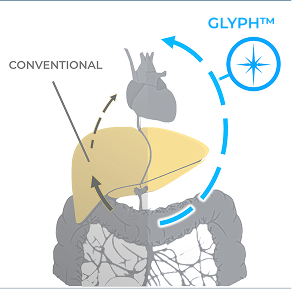
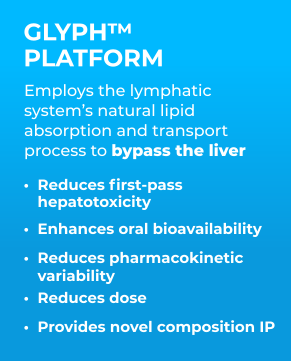
Our Glyph™ Platform is designed to enable more medicine to reach the bloodstream and brain while reducing side effects
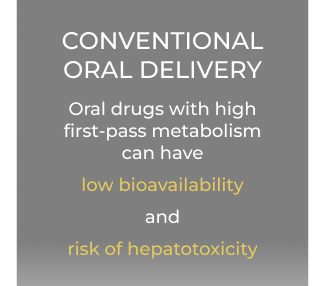
Glyph advances active drugs previously limited by high first-pass metabolism, low bioavailability, and/or side effects

Glyph™ is based on the pioneering research of the Porter Research Group at Monash University in Melbourne

Christopher Porter, Ph.D.
Original Co-inventor of Glyph Technology, Director of the Monash Institute of Pharmaceutical Sciences
The group and it’s collaborators have published research in multiple publications supporting the Glyph™ platform’s capabilities.
Seaport holds a worldwide exclusive license with a right to sublicense under Monash University’s intellectual property rights related to the Glyph platform to develop and commercialize all of our product candidates and discovery programs.
Key co-inventors of the breakthrough technology include scientists who are now members of the Seaport team

Jamie Simpson, Ph.D.
Original Co-inventor of Glyph Technology, Head of Chemistry at Seaport
Dan Bonner, Ph.D.
Co-founder, Senior Vice President, Platform at Seaport
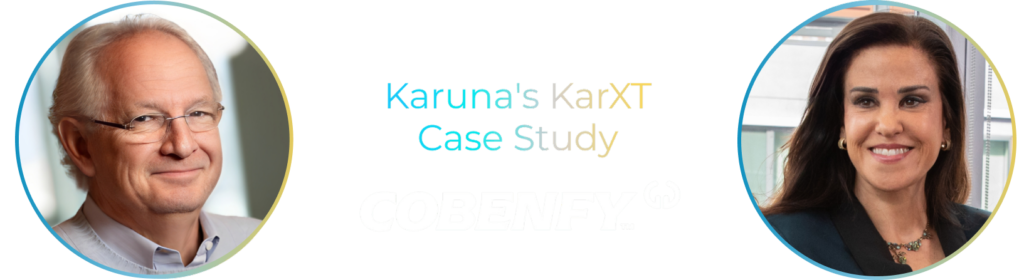
Members of our team co-founded and were central to the success of Karuna Therapeutics, which invented and advanced the first-in-class medicine Cobenfy (formerly known as KarXT), and was acquired by Bristol Myers Squibb in March 2024 for $14 billion.
Cobenfy was approved by the FDA in September 2024 and is the first drug to provide a new mechanism of action for schizophrenia in decades.
The approach we’re taking at Seaport has some important similarities to what the team did at Karuna. We are identifying drugs with proven efficacy, addressing the limitations that have held those drugs back, and then designing and executing studies with an experienced team. At Seaport, we also have distinct advantages that Karuna didn’t have, including our Glyph platform, a robust pipeline, and novel composition of matter IP.
Validated Efficacy
Xanomeline had generated exciting efficacy data at Eli Lilly, under the leadership of Dr. Steve Paul, but the drug was not being advanced due to GI tolerability issues.
These challenges were later addressed by members of our team through the invention of KarXT (now called Cobenfy) at PureTech – which was led by Daphne Zohar. Karuna was co-founded by Ms. Zohar who brought in Dr. Paul as CEO.

Proven Team
Cobenfy (formerly KarXT), was developed by combining xanomeline (a muscarinic receptor agonist) with trospium (peripherally acting antagonist that does not cross the blood-brain barrier).
Karuna ran 3 successful registration-enabling studies, achieved FDA approval, and was a success for shareholders with Karuna’s $14 billion acquisition by Bristol Myers Squibb.
Most importantly, Cobenfy represents the first new mechanism for people with schizophrenia in decades.


Members of our team co-founded and were central to the success of Karuna Therapeutics, which invented and advanced the first-in-class medicine Cobenfy (formerly known as KarXT), and was acquired by Bristol Myers Squibb in March 2024 for $14 billion.
Cobenfy was approved by the FDA in September 2024 and is the first drug to provide a new mechanism of action for schizophrenia in 70 years.
The approach we’re taking at Seaport has some important similarities to what the team did at Karuna. We are identifying drugs with proven efficacy, addressing the limitations that have held those drugs back, and then designing and executing studies with an experienced team. At Seaport, we also have distinct advantages that Karuna didn’t have, including our Glyph platform, a robust pipeline, and novel composition of matter IP.
Validated Efficacy
Xanomeline had generated exciting efficacy data at Eli Lilly, under the leadership of Dr. Steve Paul, but the drug was not being advanced due to GI tolerability issues.
These challenges were later addressed by members of our team through the invention of KarXT (now called Cobenfy) at PureTech – which was led by Daphne Zohar. Karuna was co-founded by Ms. Zohar, and Dr. Paul later joined as CEO.
Proven Team